
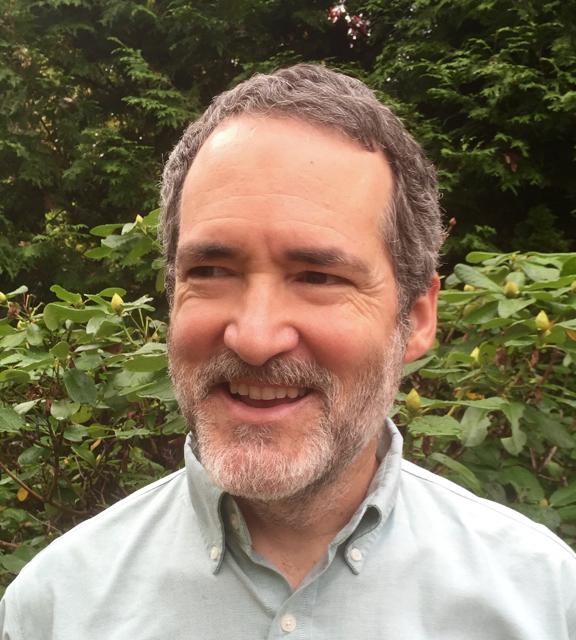
John Bradley Marston
John Bradley Marston
Harrison E. Farnsworth Professor of Physics, Professor of Physics
Overview
Professor Marston joined the Brown Physics Department in 1991. A graduate of Caltech, he received his Ph.D. from Princeton University in 1989 and did postdoctoral work at Cornell University. He has been a visiting scientist at the Institute for Theoretical Physics at UC Santa Barbara, a visiting professor at MIT, a visiting associate at Caltech, and a visiting professor at ENS-Lyon. Marston is an Alfred P. Sloan Fellow, a recipient of a National Young Investigator Award, and a Fellow and lifetime member of the American Physical Society. He has chaired the KITP Advisory Board, and is a member of the American Geophysical Union. Marston was originally trained in condensed matter physics but has also worked on climate science since 1990. In 2008 Marston was designated a NSF American Competitiveness and Innovation Fellow.
Brown Affiliations
Research Areas
On the Web

Publications
| Ait-Chaalal, Farid, Schneider, Tapio, Meyer, Bettina, Marston, J B. "Cumulant expansions for atmospheric flows." New Journal of Physics, vol. 18, no. 2, 2016, pp. 025019. |
| Ray, M.P., Lake, R.E., Marston, J.B., Sosolik, C.E. "Energy and charge transfer for Na+ ions scattered from a Ag(001) surface." Surface Science, vol. 635, 2015, pp. 37-43. |
| Bowman, David M.J.S., Perry, George L.W., Marston, J.B. "Feedbacks and landscape-level vegetation dynamics." Trends in Ecology & Evolution, vol. 30, no. 5, 2015, pp. 255-260. |
| Dritschel, David G., Qi, Wanming, Marston, J. B. "On the late-time behaviour of a bounded, inviscid two-dimensional flow." J. Fluid Mech., vol. 783, 2015, pp. 1-22. |
| Qi, W, Marston, J B. "Hyperviscosity and statistical equilibria of Euler turbulence on the torus and the sphere." J. Stat. Mech., vol. 2014, no. 7, 2014, pp. P07020. |
| Tobias, S. M., Marston, J. B. "Direct Statistical Simulation of Out-of-Equilibrium Jets." Phys. Rev. Lett., vol. 110, no. 10, 2013. |
| Marston, J.B. "Planetary Atmospheres as Nonequilibrium Condensed Matter." Annu. Rev. Condens. Matter Phys., vol. 3, no. 1, 2012, pp. 285-310. |
| Sabou, Florian C., Bodington, Natalie, Marston, J. B. "Rectification by doped Mott-insulator junctions." 2012 Lester Eastman Conference on High Performance Devices (LEC), 2012. |
| Tobias, S. M., Dagon, K., Marston, J. B. "ASTROPHYSICAL FLUID DYNAMICS VIA DIRECT STATISTICAL SIMULATION." ApJ, vol. 727, no. 2, 2011, pp. 127. |
| Marston, Brad. "Looking for new problems to solve? Consider the climate." Physics, vol. 4, 2011. |
| Horowitz, S. E., Marston, J. B. "Strong correlations in actinide redox reactions." The Journal of Chemical Physics, vol. 134, no. 6, 2011, pp. 064510. |
| Vachon, M-A, Koutroulakis, G, Mitrović, V F, Ma, Ookie, Marston, J B, Reyes, A P, Kuhns, P, Coldea, R, Tylczynski, Z. "The nature of the low-energy excitations in the short-range-ordered region of Cs 2 CuCl 4 as revealed by 133 Cs nuclear magnetic resonance." New Journal of Physics, vol. 13, no. 9, 2011, pp. 093029. |
| Marston, J. B. "Statistics of the general circulation from cumulant expansions." Chaos: An Interdisciplinary Journal of Nonlinear Science, vol. 20, no. 4, 2010, pp. 041107. |
| Bowman, D. M. J. S., Balch, J. K., Artaxo, P., Bond, W. J., Carlson, J. M., Cochrane, M. A., D'Antonio, C. M., DeFries, R. S., Doyle, J. C., Harrison, S. P., Johnston, F. H., Keeley, J. E., Krawchuk, M. A., Kull, C. A., Marston, J. B., Moritz, M. A., Prentice, I. C., Roos, C. I., Scott, A. C., Swetnam, T. W., van der Werf, G. R., Pyne, S. J. "Fire in the Earth System." Science, vol. 324, no. 5926, 2009, pp. 481-484. |
| Marston, J. B., Conover, E., Schneider, Tapio. "Statistics of an Unstable Barotropic Jet from a Cumulant Expansion." J. Atmos. Sci., vol. 65, no. 6, 2008, pp. 1955-1966. |
| Ma, Ookie, Marston, J. B. "Weak Ferromagnetic Exchange and Anomalous Specific Heat in ZnCu 3 ( OH ) 6 Cl 2." Phys. Rev. Lett., vol. 101, no. 2, 2008. |
| Paramekanti, Arun, Marston, J B. "SU ( N ) quantum spin models: a variational wavefunction study." Journal of Physics: Condensed Matter, vol. 19, no. 12, 2007, pp. 125215. |
| Fjærestad, J.O., Marston, J.B., Schollwöck, U. "Orbital currents and charge density waves in a generalized Hubbard ladder." Annals of Physics, vol. 321, no. 4, 2006, pp. 894-933. |
| Ma, Ookie, Marston, J B. "Exact equal time statistics of Orszag–McLaughlin dynamics investigated using the Hopf characteristic functional approach." J. Stat. Mech., vol. 2005, no. 10, 2005, pp. P10007-P10007. |
| Lee, Sootaek, Marston, J. B., Fjærestad, J. O. "Phase diagram of the three-band half-filled Cu-O two-leg ladder." Physical Review B, vol. 72, no. 7, 2005. |
| Braunecker, Bernd, Feldman, D. E., Marston, J. B. "Rectification in one-dimensional electronic systems." Physical Review B, vol. 72, no. 12, 2005. |
| Coleman, P., Marston, J. B., Schofield, A. J. "Transport anomalies in a simplified model for a heavy-electron quantum critical point." Physical Review B, vol. 72, no. 24, 2005. |
| Merino, J., Marston, J. B. "Dynamical 1 / N approach to time-dependent currents through quantum dots." Physical Review B, vol. 69, no. 11, 2004. |
| Tsai, S -W, Marston, J B. "κ (BEDTTTF) 2 X organic crystals: Superconducting versus anti-ferromagnetic instabilities in the Hubbard model on an anisotropic triangular lattice." Can. J. Phys., vol. 79, no. 11-12, 2001, pp. 1463-1467. |
| Houghton, A., Kwon, H.-J., Marston, J. B. "Multidimensional bosonization." Advances in Physics, vol. 49, no. 2, 2000, pp. 141-228. |
Research
Research Overview
Research Statement
On intellectual grounds, my research pushes the boundaries of what can be done to ascertain emergent properties of strongly correlated systems. It bears on 6 of the 125 outstanding scientific questions recently identified by Science Magazine: (1) Is there a unified theory explaining all correlated electron systems? (2) What is the pairing mechanism behind high-temperature superconductivity? (3) What is the structure of water? (4) Can we develop a general theory of the dynamics of turbulent flows and the motion of granular materials? (5) Will mathematicians unleash the power of the Navier-Stokes equations? And (6) how hot will the greenhouse world be?
Funded Research
“Understanding high-level nuclear waste with strong electronic correlations,” Na- tional Academy of Sciences Keck Futures Initiative (NAKFI ANT7), $75,000, 5/1/2014 – 4/30/2016.
National Science Foundation: “Strong Correlations in Environmental Condensed Matter,” NSF DMR-1306806, $275,000, 9/1/2013 through 8/31/2016.
National Science Foundation: “Collaborative Research: Type 1 – LOI02170139: Direct Statistical Approaches to Large-Scale Dynamics, Low Cloud Dynamics, and their Interaction,” NSF, 5/1/11 – 4/30/15, $436,471.
[Grants prior to this are not listed.]Background
Education and Training
| Year | Degree | Institution |
|---|---|---|
| 1989 | PhD | Princeton University |
| 1986 | MA | Princeton University |
| 1984 | BS | California Institute of Technology |
Honors and Awards
NSF American Competitiveness and Innovation Fellow (2008 -- 2011). Citation: "For his transformational interdisciplinary research harnessing the methods of theoretical condensed matter physics to attack climate modeling and the exceptional interdisciplinary educational opportunities that derive for the mentoring of his students."
Fellow of the American Physical Society (APS)
APS Outstanding Referee (2010)
National Science Foundation Creativity Extension (2008 -- 2011)
National Science Foundation Creativity Extension (2001 -- 2002)
Gordon Godfrey Fellow, University of New South Wales, Australia (2000)
Alfred P. Sloan Fellow (1994 -- 1998)
National Science Foundation Young Investigator (1993 -- 1998)
Affiliations
Collaborators
| Name | Title |
|---|---|
| Feldman, Dmitri | Professor of Physics |
| Fox-Kemper, Baylor | Professor of Earth, Environmental, and Planetary Sciences |
| Mitrovic, Vesna | L. Herbert Ballou University Professor of Physics, Chair of Physics |
| Pacifici, Domenico | Associate Professor of Engineering, Associate Professor of Physics |
| Wang, Lai-Sheng | Jesse H. and Louisa D. Sharp Metcalf Professor of Chemistry |
| Xiao, Gang | Ford Foundation Professor of Physics, Professor of Engineering |
Affiliations
Fellow and lifetime member of the American Physical Society.
Member of the American Geophysical Union.
Teaching
Teaching Overview
There is a well-defined core to the physics curriculum, and any serious university must teach this core. I have taught the full range of physics courses at Brown University: freshman physics for concentrators, pre-med physics, introductory astronomy with nighttime laboratories for science majors, sophomore electricity and magnetism, an undergraduate seminar in quantum computation, and graduate courses in quantum mechanics, advanced statistical mechanics and quantum many-body theory. I have employed the latest approaches and technology by developing new lecture demonstrations of quantum physics such as single-photon interference, by making extensive use of the web, and by applying the "Just in Time" Teaching method. However, the single most important factor in good teaching, I'm convinced, is the ability to see the world as fresh and new even as one teaches familiar material. A teacher who embodies this spirit will by example convey to students a sense of the enjoyment and excitement that comes from the discovery of new, and often surprising, things about the world.
At the boundaries of the physics curriculum lie several multidisciplinary fields of great current interest: Biological physics, nanoscience, and environmental science. Environmental physics classes have been taught elsewhere, but generally these have been based on the notion that physics presents us with a fixed set of tools that can then be applied to various environmental problems. In a new freshman seminar that I have developed at Brown, entitled Introduction to Environmental Physics: The Quantum Mechanics of Global Warming (PHYS0110/0120), I turn this logic around to suggest that complex environmental questions can spur further development of physical ideas.
Of course there is a whole other side to teaching: Training undergraduate and graduate students to carry out research. It requires intense individual attention from the advisor, and the results are uniquely satisfying. Much of my research is done with graduate students. It is wonderful to see these students mature into independent researchers who then go on to make significant contributions to theoretical physics. On the other hand undergraduates are more adventurous than graduate students. I have found that supervising senior thesis projects is a good way to explore new ideas because undergraduate students are willing to risk challenging conventional thinking.
My former undergraduate senior thesis students (6 women and 6 men) have continued their study of physics in graduate school. Three of my former graduate students have faculty positions, as have three of my former postdocs. I am committed to educating a diverse next generation of physicists.
Teaching
| PHYS 1570 - Physics of Climate and Energy |
| PHYS 1600 - Computational Physics |
| PHYS 1970J - Introduction to Fluids |
| PHYS 2030 - Classical Theoretical Physics I |
| PHYS 2060 - Quantum Mechanics |
| PHYS 2430 - Quantum Many Body Theory |
| PHYS 2470 - Advanced Statistical Mechanics |
| PHYS 2570 - Physics of Climate and Energy |
| PHYS 2600 - Computational Physics |