
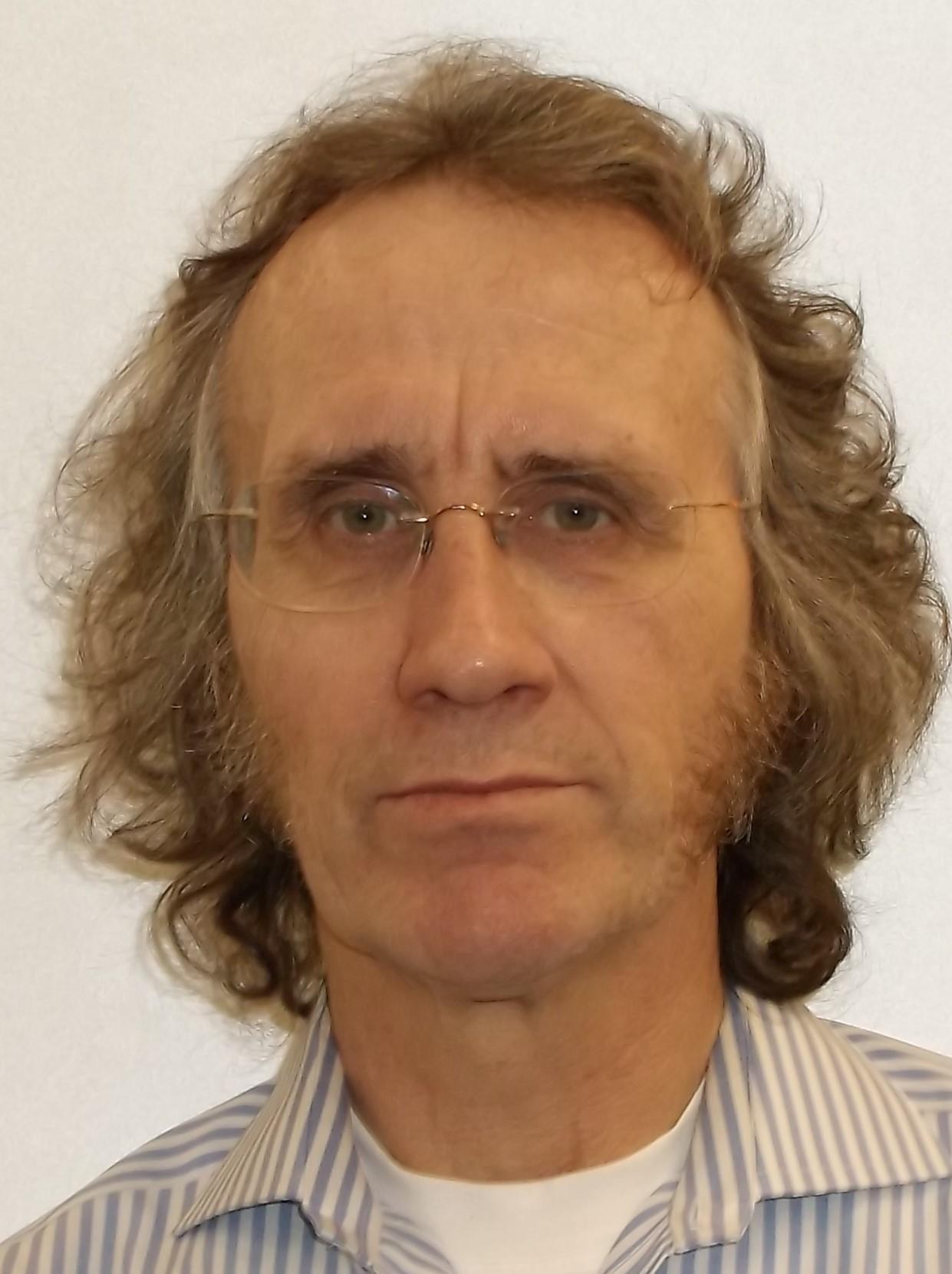
Leo Depuydt
Leo Depuydt
Professor Emeritus of Egyptology and Assyriology
Overview
1975-1990: Studies in Leuven, Cincinnati, Jerusalem, Tuebingen, and New Haven, as well as Providence and Middlebury. Yale PhD. '90. Senior Lector Yale (1989-1991). 1991-2022: Professor, Assistant, Associate, Full; visiting at Yale and Harvard. 10+ books and 200+ peer-reviewed articles and reviews. For details, see CV.
For two recent discoveries about the OS of the physical brain, see Research. Cf. also "The Boole Manifesto" (2022) and "The Thalamus Manifesto" (2024) on researchgate.net and academia.edu.
Implied in recent lines of research, especially on mathematical infinity (see CV): The Big Bang Theory is a total farce. It is easy to see what led to it in the 1920s. Just read the sources of that time. A quickie hack job. Everyone agrees that there is no evidence for it. The same with "singularity." No one even knows what a singularity is supposed to be. Big bang and singularity are to physics what alchemy is to chemistry.
Brown Affiliations
Publications
| Depuydt, Leo. "Apropos 1+2+3+4+5+...=<img src="http://latex.codecogs.com/gif.latex?-frac{1}{12}" title="-frac{1}{12}" />: Mapping Infinity in Light of the Number Circle (or Cycle), in L. Euler’s Footsteps and with the Aid of Two Dimensional Infinite Series, and Replacing Negative Infinity and Positive Infinity with Just Infinity." Advances in Pure Mathematics, vol. 07, no. 01, 2017, pp. 75-133. |
| Depuydt, Leo. "A Retrospective." Prolegomena to the Complete Physical and Mathematical Theory of Rational Human Intelligence in Boolean, Lagrangian, and Maxwellian Mode, 2015, pp. 31-86. |
| Depuydt, Leo. "Book Acknowledgments." Prolegomena to the Complete Physical and Mathematical Theory of Rational Human Intelligence in Boolean, Lagrangian, and Maxwellian Mode, 2015, pp. 177-186. |
| Depuydt, Leo. "Chapter Abstracts." Prolegomena to the Complete Physical and Mathematical Theory of Rational Human Intelligence in Boolean, Lagrangian, and Maxwellian Mode, 2015, pp. 163-170. |
| Depuydt, Leo. "Chapter Acknowledgments." Prolegomena to the Complete Physical and Mathematical Theory of Rational Human Intelligence in Boolean, Lagrangian, and Maxwellian Mode, 2015, pp. 171-176. |
| Depuydt, Leo. "Contents." Prolegomena to the Complete Physical and Mathematical Theory of Rational Human Intelligence in Boolean, Lagrangian, and Maxwellian Mode, 2015, pp. 11-30. |
| Depuydt, Leo. "FRONT MATTER." Prolegomena to the Complete Physical and Mathematical Theory of Rational Human Intelligence in Boolean, Lagrangian, and Maxwellian Mode, 2015, pp. 1-10. |
| Depuydt, Leo. "Preface." Prolegomena to the Complete Physical and Mathematical Theory of Rational Human Intelligence in Boolean, Lagrangian, and Maxwellian Mode, 2015, pp. 87-162. |
| Depuydt, Leo. "The Literature of the Copts and the Contributions of Monsignor Hyvernat to the Study of the Subject (Fourth Annual Henri Hyvernat Lecture)." Advances in Historical Studies, vol. 04, no. 04, 2015, pp. 320-335. |
| Depuydt, Leo. "The Alleged Gospel of Jesus's Wife: Assessment and Evaluation of Authenticity." Harvard Theological Review, vol. 107, no. 02, 2014, pp. 172-189. |
| Depuydt, Leo. "The Prime Sequence: Demonstrably Highly Organized While Also Opaque and Incomputable—With Remarks on Riemann’s Hypothesis, Partition, Goldbach’s Conjecture, Euclid on Primes, Euclid’s Fifth Postulate, Wilson’s Theorem along with Lagrange’s Proof of It and Pascal’s Triangle, and Rational Human Intelligence." Advances in Pure Mathematics, vol. 04, no. 08, 2014, pp. 400-466. |
| Depuydt, Leo. "The Mathematical and Physical Theory of Rational Human Intelligence: Complete Empirical-Digital Properties; Full Electrochemical-Mechanical Model (Part I: Mathematical Foundations)." Advances in Pure Mathematics, vol. 03, no. 05, 2013, pp. 491-561. |
| Depuydt, Leo, Gill, Richard D. "Higher Variations of the Monty Hall Problem (3.0, 4.0) and Empirical Definition of the Phenomenon of Mathematics, in Boole’s Footsteps, as Something the Brain Does." Advances in Pure Mathematics, vol. 02, no. 04, 2012, pp. 243-273. |
| Depuydt, Leo. "To Comma or Not to Comma: The Mathematics of the Relative Clause, All Types, via Boole and Venn." International Journal of Intelligence Science, vol. 02, no. 04, 2012, pp. 106-114. |
| Depuydt, Leo. "The Monty Hall Problem and beyond: Digital-Mathematical and Cognitive Analysis in Boole’s Algebra, Including an Extension and Generalization to Related Cases." Advances in Pure Mathematics, vol. 01, no. 04, 2011, pp. 136-154. |
| Depuydt, Leo. "New Date for the Second Persian Conquest, End of Pharaonic and Manethonian Egypt: 340/39 B.C.E." Journal of Egyptian History, vol. 3, no. 2, 2010, pp. 191-230. |
| Depuydt, Leo. "From Twice Helix to Double Helix: A Comprehensive Model for Egyptian Calendar History." Journal of Egyptian History, vol. 2, no. 1, 2009, pp. 115-147. |
| Depuydt, Leo. "Function and Significance of the Ebers Calendar's Lone Feast-Hieroglyph (Gardiner Sign-List W3)." Journal of Egyptian History, vol. 1, no. 1, 2008, pp. 117-138. |
| Depuydt, Leo. "Unexpected links between Egyptian and Babylonian mathematics." The Mathematical Intelligencer, vol. 30, no. 3, 2008, pp. 72-74. |
| Depuydt, Leo. ":Catalogue des ostraca hiératiques non littéraires de Deîr el‐Médînéh, Tome IX – N os 831–1000." Journal of Near Eastern Studies, vol. 66, no. 4, 2007, pp. 296-298. |
Research
Research Overview
See CV.
(8/2026) LATEST DEVELOPMENTS IN RESEARCH
ON THE BIOCHEMISTRY OF THE BRAIN’S OS: TWO RECENT DISCOVERIES.
Over the past 25+ years, I have been attempting to demonstrate in a number of publications that George Boole showed the way in describing how we think rationally, even if he was bypassed in this regard by the history of logic and mathematics (see my The Boole Manifesto).
In a strange twist, in this Internet age his Boolean algebra is now everywhere.
The theory of the brain’s OS is a theory of physics and mathematics that can be described independently from the brain because it could be made to work in a different medium (batteries, electrical wires, and such).
Naturally, the theory is active in the biochemical medium of brain matter. I was therefore aware that, sooner or later, the theory would need to be formulated also in terms of brain function. In just the last couple of years, a certain leisure allowing intense reflection and protracted meditation led to not One but Two needed discoveries.
The first discovery, which came after finally studying maps of the brain in 2024, is that the operation of the brain’s OS must be centered in the thalamus and especially simply WHY that must be so (see my The Thalamus Manifesto).
The final statement in a 2024 800-page book (Oxford UP) edited by W.M. Usrey and S.M. Sherman is: “Why do we have a thalamus?” (p. 779). Coming from the perspective of the brain’s OS in Boolean fashion, the answer is in fact obvious. In other words, we can and do know why we have a thalamus for thinking rationally. What still needs to be established is how exactly it works in biochemical terms. The “why” is what has become clear. The “how” still needs to be established. There have been many articles coming to the conclusion that the thalamus is absolutely central. But no peep so far about how it allows us to think rationally.
Five articles—with doi, author(s), and date—are as follows: (1) 10.1002/wcs.1256 (L.M. Ward, 2013); (2) 10.1016/j.biopsych.2017.11.008 (S. Pamaudeau, S.S. Bolkan, C. Kellendonk, 2017); (3) 10.1016/B978-0-12-407794-2.00009-2 (D.A. Llano, 2016); (4) 10.3389/inbeh.2021.633872 (R. Worden, M.S. Bennett, V. Neacsu, 2021); (5) 10.1002/alz.13563 (J.M. Biesbroek, M.G. Verhagen, S. van der Stigchel, G.J. Biessels).
There is no reference to how we think rationally in these articles, and one assumes nor is there in all articles of similar nature.
As regards the biochemical details, because the scale is so small and the events are located deep in the brain, it is necessary to first know what we are looking for before we try to look for it. I am therefore writing “A Brief History of the Brain’s OS,” a bit like Hawking’s brief history of time. The history of our rational intelligence as a biochemical organism begins about four and a half billion years ago.
But the most important reason for first establishing the history is as as follows. As was said above, the structure can be studied independently from the brain. It is of a physical and mathematical nature and can be described completely. It exists independently because it could be reproduced in another medium. Its structure is described in the manner of something like F = ma “force equals mass multiplied by acceleration.” When the famous apple fell from the famous tree, it was not necessary to examine every molecule in the tree and in the apple to describe what happened. No amount of biochemistry will be able to determine the nature of the brain’s OS. Conversely, biochemistry will be needed at great length to establish how the structure is embedded in brain mass.
To stress this point once more. Many, many articles have been written about the biochemistry of the thalamus. Most of it is beyond my competence. Yet, I personally do not doubt that the results communicated in these articles add to our knowledge of the thalamus. Then again, no number of articles about only the biochemistry will uncover how we think rationally. The theory of the brain's OS is fundamentally a theory of physics and mathematics and can be formulated 100% entirely in this domain only. But the physics and mathematics can inform fairly exactly what components and how many one is looking for biochemically.
[There has been a discussion, more prominently in recent times, whether the difference in intelligence between the races could be genetic. Frankly, that is totally out of the question already from the following simple consideration: how could certain members of any race be “smarter” (whatever that means) than all members of any other race if there were a hard wall between the intelligences of the races? However, the careful consideration of the physical and mathematical theory of the brain’s OS shows that rational human intelligence has to be exactly the same in all members of the human race. In the years since the human genome has been mapped, there has never been one iota of evidence in the vast record (check it) that there is the slightest genetic difference in rational intelligence between the races. And there never ever will be. Because it is impossible.]
Then, in a second discovery, in 2025, I was able to ground the fundamental principles of mathematical probability (which begins with Pascal and Fermat and the first extended treatise by Huygens) in terms of the physical and mathematical theory of rational human intelligence.
The principles still valid today, perhaps for lack of an alternative, are the seven formulated by Pascal about two centuries ago. Boole, whose Laws of 1854 are also about probability, uses them for the most part. It is time for leaving these age-old principles behind and formulating the principles of mathematical probability in terms of brain function.
Huygens was the first to ask something like the following: if $36,000 are on the table and the first to throw a six in successive throws of a single die gets the money, and I own the privilege of making the second throw, then how much do you need to pay me to get the excitement of going for the whole pot with the second throw instead of me? Everyone agrees that the sum to be paid is $5000. This is mathematical probability. It is exact. And not statistical probability, as in the question: What are the chances that I will die in the next ten years?
The $36,000 question needs to be defined as brain function, radiating from the thalamus. So does the old problem of “D’Alembert’s mistake” regarding what chance I have to throw Heads at least once in two throws of a single coin. D’Alembert thought it was 2/3. It is obviously 3/4. But the concept of “sample space,” which is so often raised in discussions of D’Alembert, is totally out of place. It is not really wrong. But it prevents the whole matter from being explained in terms of brain activity, the ultimate foundation. In fact, Laplace’s 200-year old explanation of the mistake is still to this day the closest to the truth. But not entirely. Stay tuned.
Research Statement
(8/2026) LATEST DEVELOPMENTS IN RESEARCH
ON THE BIOCHEMISTRY OF THE BRAIN’S OS: TWO RECENT DISCOVERIES.
See Research Overview above.
Background
Education and Training
| Year | Degree | Institution |
|---|---|---|
| 1990 | PhD | Yale University |
| 1987 | MA | Yale University |
Honors and Awards
See CV.
Affiliations
Affiliations
See CV.
Teaching
Teaching Overview
Teaching
| EGYT 0200 - Egypt in the Time of Cleopatra |
| EGYT 1410 - Ancient Egyptian Literature |
| EGYT 1440 - History of Egypt II |
| EGYT 1490 - Calendars and Chronology in Ancient Egypt and the Ancient World |
| EGYT 1495 - The Science and the Medicine of the Ancient Egyptians |
| EGYT 2210 - Introduction to Coptic |
| EGYT 2300 - Readings in Ancient Egyptian |
| EGYT 2410 - Late Egyptian |
| EGYT 2610 - Introduction to Demotic |
| EGYT 2620 - Demotic Texts |