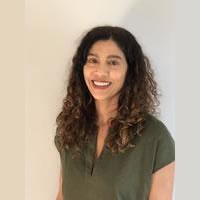
Leila Lehnen was born in Paris, France, and raised across Brazil, Germany, and India, experiences that shaped her transnational perspective. She studied German literature at Eberhard-Karls-Universität Tübingen before moving to the United States as part of a study abroad program. She went on to earn an MA in Comparative Literature from the University of Washington in Seattle and a PhD in Brazilian and Latin American Literature from Vanderbilt University. Her research and teaching focus on contemporary Brazilian and Latin American literary and cultural production, with particular attention to the intersections of social justice and the arts.
A specialist in contemporary Brazilian and Latin American literature and culture, her scholarly work engages the environmental humanities, extractivism, counter-colonial textual and visual practices, and Indigenous literatures and cultural expression.
Her work interrogates the role of literature and the arts in expanding democratic imaginaries, challenging authoritarian formations, and confronting the enduring afterlives of coloniality.
Her book, Citizenship and Crisis in Contemporary Brazilian Literature, offers a critical examination of how contemporary Brazilian writers depict and contest differentiated citizenship.
Her second book investigates the intersections between Brazilian literature and democratic life, analyzing how cultural texts articulate and reimagine democratic imaginaries, particularly in relation to environmental and Indigenous rights. She has published scholarly texts on ecocriticism, Indigenous literature, decoloniality, Afro-Brazilian literature, citizenship, and human rights across Brazilian and Latin American contexts.
Leila Lehnen has taught at the University of Colorado, Boulder, the University of New Mexico, and Macalester College.