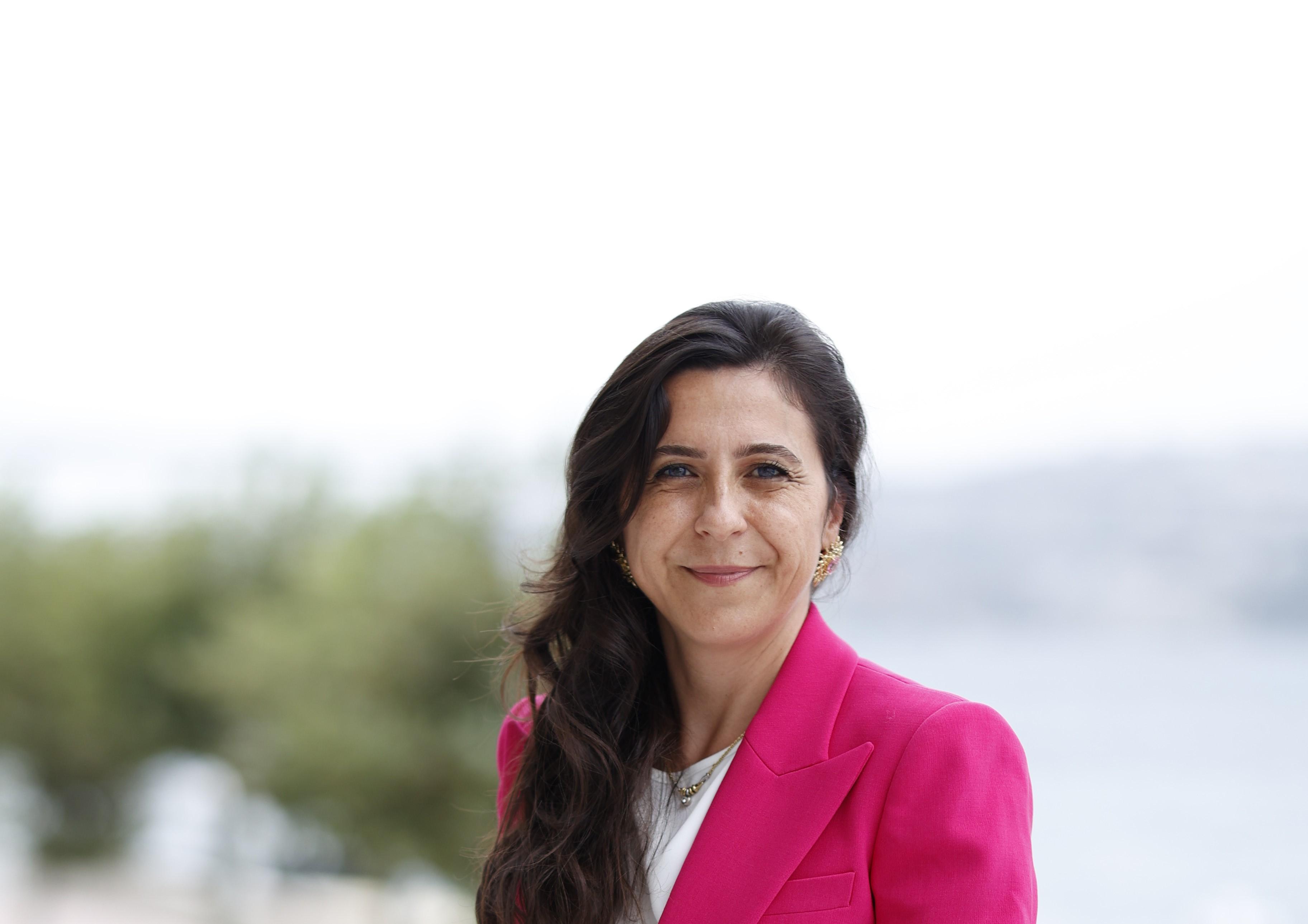
Şebnem Kalemli-Özcan is Schreiber Family Professor of Economics at Brown University and the Director of the Global Linkages Lab at the Economics Department. She is also the incoming Director of Rhodes Center for International Finance at Watson School and William R. Rhodes Professor of International Economics. She is a Research Associate at the National Bureau of Economic Research (NBER) and a Research Fellow at the Center for Economic Policy Research (CEPR). Currently, she is the co-editor of American Economic Journal: Macroeconomics. She also serves at the economic advisory panels of the NY Federal Reserve and the Bank of International Settlements.
She was the Duisenberg Fellow at the European Central Bank, held a position as Lead Economist/Adviser for the Middle East and North Africa Region, served as the Houblon-Norman Fellow of Bank of England and also CFR International Affairs Fellow. She was the Senior Policy Advisor and Assistant Director at the International Monetary Fund. She is the first Turkish social scientist who has received the Marie Curie IRG prize in 2008 for her research on European financial integration.
Her work is at the intersection of international finance, economic growth, and development economics, using large firm- and bank-level and issuer-investor-level datasets to map how financial and real sectors interact across borders. A central thread of her work is financial integration — the links between financial markets through cross-border capital flows or foreign participation in domestic financial markets — where she argues that integration improves capital allocation and supports growth (especially in emerging markets reliant on capital inflows), while also documenting the fragility that comes with fickle flows and misallocation of capital flows with domestic financial frictions. Much of her recent agenda focuses on economic growth and productivity in Europe, especially in the aftermath of the European debt crisis; in a signature contribution she links firms to banks to sovereigns to quantify the role of financial factors behind sluggish corporate investment and show that debt overhang and rollover risk accounted for 60 percent of the decline in aggregate corporate investment in post-crisis Europe. Beyond this, she has written influentially on FDI and growth, monetary policy spillovers, exchange rates, sovereign-bank-corporate "doom loops," and more recently on supply chains and SME fragility, with the unifying aim of explaining how global financial linkages shape macroeconomic fluctuations and long-run development.