
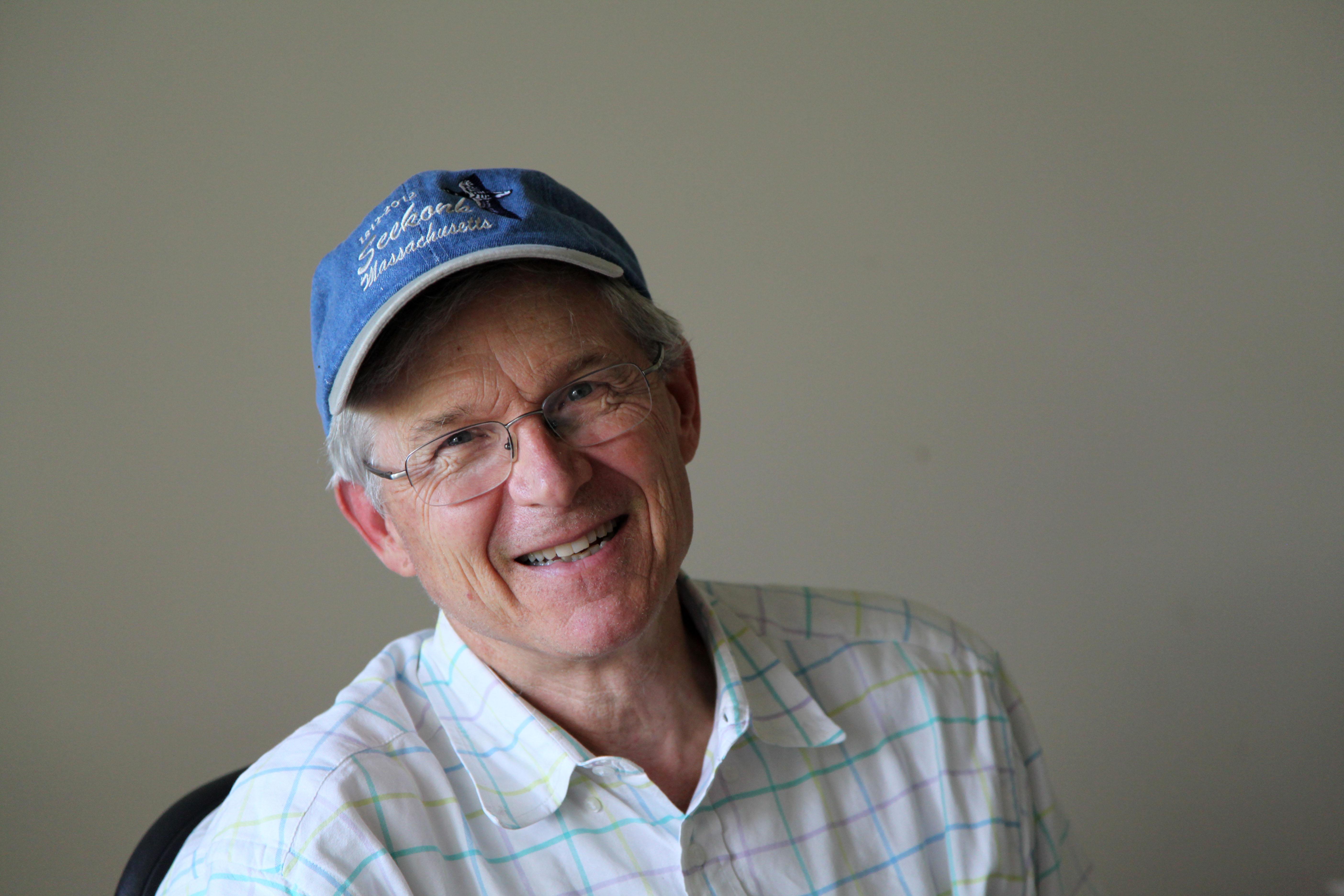
Thompson Webb
Thompson Webb
Professor Emeritus of Geological Sciences
Overview
I received a botany degree from Swarthmore and a PhD in atmospheric sciences from the University of Wisconsin-Madison. In 1972, I joined John Imbrie and R.K. Matthews to study Quaternary climates, as CLIMAP was starting. I added a terrestrial paleoclimate and paleovegetation focus to their paleoceanographic perspective on earth system history. Once COHMAP (Cooperative Holocene Mapping Project) began in 1977, I worked with colleagues at Wisconsin, Minnesota, Oxford, Durham, Lamont, Brown, and Oregon to compile large data sets, to interpret them in climate terms, and to compare the results with climate-model simulations of the past 21,000 years. Key results appeared in Science in 1988, in a joint-edited book in 1993 and in an issue of Quaternary Science Reviews in 1998. In 1996, I and Jeff Donnelly began studying the sedimentary record of land-falling hurricanes. I retired in 2005 and continue teaching in Summer and Continuing Studies at Brown.
Brown Affiliations
Research Areas
Research
Research Overview
Research Statement
After two years of postdoctoral studies with Margaret Davis at the University of Michigan, Thompson Webb, III came to Brown in September, 1972. He has enjoyed thirty-six productive years during which he profited from the high scientific standards and excellent collegiality in the Department of Geological Sciences. With a degree in botany from Swarthmore (1966) and a PhD in atmospheric sciences from the University of Wisconsin-Madison (1971), Tom brought an interdisciplinary perspective, which included two years as a postdoc in paleoecology at the University of Michigan. He joined John Imbrie and Rob Matthews, who was then Chair, in the "Soft Rock" group, which has now evolved into the Earth System History group. CLIMAP, which John Imbrie headed, was just getting going with its global view of late Quaternary climates, and Tom added a terrestrial paleoclimate focus to CLIMAP's general paleoceanographic perspective.
Tom began as an Assistant Professor (Research), and shared that beginning rank with both Jim Head and Jan Tullis. He was appointed an Associate Professor in 1975 with tenure in 1979 and advanced to full Professor in 1984. He and the Pollen Lab were initially housed on the third floor of Lincoln Field before moving into modern quarters when the "new" building was completed in 1982. His paleoclimate research flourished with its focus on mapping large data sets and the calibration of pollen data in climate terms. From 1977 to 1994, he collaborated with Herb Wright (University of Minnesota), John Kutzbach (University of Wisconsin-Madison), Patrick Bartlein (University of Oregon), Bill Ruddiman, Columbia University and University of Virginia), Alayne Street-Perrott (Oxford University), Brian Huntley (Durham University), and Warren Prell on an National Science Foundation (NSF)- and Department of Energy (DOE)- supported international research project called COHMAP (Cooperative Holocene Mapping Project), which was patterned after CLIMAP. During the mid-1980s, COHMAP held a series of workshop meetings in Madison, Wisconsin each summer, where Tom's graduate students and postdocs had a chance to interact with a wide variety of paleoclimate researchers. Research in COHMAP and later TEMPO (Testing Earth System Model with Paleoenvironmental Observations) featured the development of global pollen and lake-level data sets and climate model simulations for studying the climate, vegetation, and hydrological changes since the last glacial maximum 21,000 years ago. Inspired by Patrick Bartlein in 1984, Tom created a series of postage stamp maps to illustrate vegetation dynamics in eastern North America, and between 1998 and 2002 Jack Williams (PhD '00), Bryan Shuman (PhD '01), and Phil Leduc helped Tom create animations of the maps for all of North America, which are available on the web at Pollen Viewer through the World Data Center for Paleoclimatology, which was originally set up at NOAA by two of Tom's former students, Jonathan Overpeck PhD '86 and Robin Webb PhD '90. A lead article in Science in 1988, two edited books (1988 and 1993), and two edited journal issues (1985 and 1998) describe the key results from COHMAP.
Tom was the major advisor to 10 PhD and 7 ScM students in the department and a co-advisor to 4 other PhD students in biology at Yale and in anthropology and applied mathematics at Brown. His lab also housed 5 postdocs and 5 visiting scientists over the years. From 1990 on (when both his daughters were in college), he served regularly as the Geo-Bio advisor and enjoyed the many requests for recommendation letters that came with all this added contact with undergraduates. He also enjoyed working with Jan Tullis whose dedication to advising is a departmental strength.
Tom taught courses in Weather and Climate, The Fossil Record, Mathematical Models in Geology, Paleoclimatology, and Quaternary and Human Paleoecology. His interest in teaching led him to be active in the Sheridan Center for College Teaching, where he was a Teaching Fellow from 1997-2002. He also helped Jan Tullis in the department in being a liaison with the Sheridan Center. From 2000-2004, he and Terry Tullis shared an interest in promoting more active University support for the use of instructional technology in teaching. Tom continues to explore the best uses for technology in teaching with his current involvement in Summer and Continuing Studies at Brown.
To read heart-felt tributes to Tom from his former students and colleagues, go to: Tom Tributes .
Scholarly Work
Webb, T., III 2013. Paleoecology. In S. Levine (ed.) Encyclopedia of Biodiversity, Vol. 5. Academic Press, New York pp. 645-655.
Williams, J.W., B. Shuman, P.J. Bartlein, N.S. Diffenbaugh, and T. Webb III. 2010. Rapid, time-transgressive, and variable response to early-Holocene midcontinental drying in North America. Geology 38:135-138.
Marchant, R., S. Brewer, T. Webb III, and S.T. Turvey. 2009. Holocene deforestation: a history of human-environmental interactions, climate change and extinction. In S. Turvey (ed.) Global Extinctions. Oxford University Press. p. 213-234.
Williams, J. W., B. Shuman, P. J. Bartlein, J. Whitmore, K. Gajewski, M. Sawada, T. Minckley, S. Shafer, A. E. Viau, T. Webb, III, P. M. Anderson, L. B. Brubaker, C. Whitlock, and O. K. Davis. 2006. An Atlas of Pollen-Vegetation-Climate Relationships for the United States and Canada. American Association of Stratigraphic Palynologists Foundation, Dallas, TX. 293 pp.
Shuman, B, P.J. Bartlein, and T. Webb III. 2005. The relative magnitude of millennial- and orbital-scale climatic change in eastern North America during the Late-Quaternary. Quaternary Science Reviews 24: 2194-2206.
Williams, J.W., B.N. Shuman, T. Webb III, P.J. Bartlein, P.L. Leduc. 2004. Late Quaternary vegetation dynamics in North America: scaling from taxa to biomes. Ecological Monographs. 74:309-334.
Donnelly, J. P., and T. Webb III. 2004. Backbarrier sedimentary records of intense hurricane landfalls in the northeastern United States: In R. Murnane and K.-b. Liu, (eds.). Hurricanes and Typhoons: Past Present and Potential. Columbia University Press p. 58-95.
Shuman, B. N., P. Newby, Y. Huang, and T. Webb, III, 2004. Evidence for the close climatic control of New England vegetation history. Ecology. 85:1297-1310.
Webb, T., III, B.N. Shuman, J.W. Williams. 2003. Climatically-forced vegetation dynamics in North America during the late-Quaternary. In A. Gillespie, S.C. Porter, and B.F. Atwater, (eds.). The Quaternary Period in the United States. Elsevier, New York, p. 459-478
Shuman, B. N., Bartlein, P. J., Logar, N., Newby, P., and Webb, T., III, 2002. Parallel vegetation and climate responses to the Early-Holocene collapse of the Laurentide Ice Sheet. Quaternary Science Reviews, 21: 1793-1805.
Williams, J. W., B.N. Shuman, T. Webb III 2001. Dissimilarity analyses of late-Quaternary vegetation and climate in eastern North America. Ecology 82: 3346-3362.
Webb, T., III (ed.) 1998. Late Quaternary Climates: Data Syntheses and Model Experiments. Quaternary Science Reviews 17, Nos. 6-7: 465-688.
Bartlein, P.J., P.M. Anderson, K.H. Anderson, M.E. Edwards, R.S. Thompson, R.S. Webb, T. Webb III, and C. Whitlock. 1998. Paleoclimate simulations for North America for the past 21,000 years: features of the simulated climate and comparisons with paleoenvironmental data. Quaternary Science Reviews 17: 549-585.
Webb, T., III. 1995. Pollen records of late Quaternary vegetation change: plant community rearrangements and evolutionary implications. In Board of Earth Sciences and Resources, National Research Council (eds.) Effects of Past Global Change on Life. National Academy Press, pp. 221-232.
Wright, H.E., Jr., J.E. Kutzbach, T. Webb III, W.F. Ruddiman, F.A. Street-Perrott, and P.J. Bartlein (eds.) 1993. Global Climates Since the Last Glacial Maximum. Univ. of Minnesota Press, Minneapolis. (569 p.).
Webb, T., III and P.J. Bartlein. 1992. Global changes during the last 3 million years: climatic controls and biotic responses. Annual Reviews of Ecology and Systematics 23:141-173.
Prentice, I.C., P.J Bartlein, and T. Webb III. 1991. Vegetational climate change in eastern North America since the last glacial maximum. Ecology 72:2038-2056.
Overpeck, J.T., P.J. Bartlein, and T. Webb III. 1991. Potential magnitude of future vegetation change in eastern North America: comparisons with the past, Science 252: 692-695.
Huntley, B. and T. Webb III (eds.) 1988. Vegetation History. Vol. 7 in Handbook of Vegetation Science. Kluwer Academic Publ., Dordrecht, The Netherlands, (803 p.).
COHMAP Members. 1988. Climatic changes of the last 18,000 years: observations and model simulations. Science 241: 1043-1052.
Webb, R. S. and T. Webb III. 1988. Rates of sediment accumulation of small lakes and bogs in eastern North America. Quaternary Research 30: 284-297
Jacobson, G. L., Jr., T. Webb III, and E. C. Grimm. 1987. Patterns and rates of vegetation change during deglaciation of eastern North America. In W. F. Ruddiman and H. E. Wright, Jr. (eds.). North America and Adjacent Oceans during the Last Deglaciation, Decade of North American Geology, G.S.A., Boulder, CO, pp. 277-288.
Bartlein, P. J., I. C. Prentice, and T. Webb III. 1986. Climatic response surfaces based on pollen from some eastern North America taxa. Journal of Biogeography 13:35-57.
Webb, T., III. 1986. Is vegetation in equilibrium with climate? How to intrepret Late-Quaternary pollen data. Vegetatio 67: 75-91.
Prentice, I. C. and T. Webb III. 1986. Pollen percentages, tree abundances and the Fagerlind effect: a comparison of vegetational calibration methods for pollen spectra. Journal of Quaternary Science 1:35-43.
Overpeck, J. T., T. Webb III, and I. C. Prentice. 1985. Quantitative interpretation of fossil pollen spectra: dissimilarity coefficients and the method of modern analogs for pollen data. Quaternary Research 23:87-108.
Bartlein, P. J., T. Webb III, and E. C. Fleri. 1984. Holocene climatic change in the northern Midwest: pollen-derived estimates. Quaternary Research 22: 361-374.
Webb, T., III. 1981. 11,000 years of vegetational change in eastern North America. Bioscience 31:501-506.
Bernabo, J. C., and T. Webb III. 1977. Changing patterns in the Holocene pollen record from northeastern North America: a mapped summary. Quaternary Research 8:64-96.
6) Webb, T., III. 1974. Corresponding distributions of modern pollen and vegetation in lower Michigan. Ecology 55:17-28.
Webb, T., III, and R. A. Bryson, 1972. Late- and post-glacial climatic change in the northern Midwest, U.S.A.: quantitative estimates derived from fossil pollen spectra by multivariate statistical analysis. Quaternary Research 2:70-115.
Background
Education and Training
| Year | Degree | Institution |
|---|---|---|
| 1971 | PhD | University of Wisconsin at Madison |
| 1966 | BA | Swarthmore College |
Honors and Awards
2) Elected to membership in Sigma Xi, 1966
3) Awarded an NSF Postdoctoral Fellowship for 1970-71
4) Awarded an I.S.T. (Univ. of Michigan) Postdoctoral Fellowship for 1970-71
5) Elected as a Visiting Fellow at Clare Hall, University of Cambridge for 1977-78
6) CIRES Fellowship, Visiting Professor, University of Colorado, Boulder, 1988-89
7) Elected as a Fellow of AAAS, 1991
8) Selected to give the Oosting Memorial Lecture at Duke Unversity, April, 1994
9) Bullard Fellowship, Harvard University, 1995-6
10) Listed in Who's Who in America, 1996-2000 (4th Generation)
11) Selected to give the Case Memorial Lecture in Paleontology, University of Michigan, 1996
12) Distinguished Career Award for 2006, American Quaternary Association, 2006
Affiliations
Affiliations
American Quaternary Association
Ecological Society of American
Wisconsin Academy of Arts, Letters and Sciences
Forest History Society
Teaching
Teaching Overview
Professor Webb is an Emeritus Faculty, and therefore is no longer teaching regular classes.
Classes Taught:
GEOL 0310: Fossil Record
GEOL 1350: Weather and Climate
GEOL 2300: Mathematical Models in the Geological Sciences
GEOL 2350: Quarternary Climatology Seminar
GEOL 2390: Quaternary Paleoecology Seminar
ADVISING
Former Graduate Students:
Patricia Anderson '82 (Anthropology)
Chris Bernabo, Ph.D. '77
Jennifer Bravo, Sc.M. '97
Jeffrey Donnelly, Ph.D. '00
Benjamin Felzer, Ph.D. '96
Denise Gaudreau, Ph.D. '86 (Yale)
Sally Howe Ph.D. '80 (Applied Mathematics)
Peter Jaumann, Sc.M. '91
Ruth Laseski, Ph.D. '83
Richard Lederer, Sc.M. '00
Sheldon Nelson, Sc.M. '81
Paige Newby, Sc.M. '04
Jonathan Overpeck, Ph.D. '86
Barbara Santamaria Cross, Sc.M. '75
Hong Shao, Sc.M. '91
Bryan Shuman, Ph.D. '01
Alison Smith, Ph.D. '91
Polychronis Tzedakis, Sc.M. '87
Kathleen Vanerwall-Heide, Ph.D. '81
Robert Webb, Ph.D. '90
John Williams, Ph.D. '00