
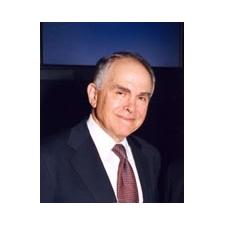
Donald J Marsh
Donald J Marsh
Frank L. Day Professor Emeritus of Biology, Dean Emeritus of Medicine and Biological Sciences, Professor Emeritus of Medical Science, Professor of Medical Science (Research)
Publications
| Marsh DJ, Postnov DD, Rowland DJ, Wexler AS, Sosnovtseva OV, Holstein-Rathlou NH. "Architecture of the rat nephron-arterial network: analysis with micro-computed tomography." American journal of physiology. Renal physiology, vol. 313, no. 2, 2017, pp. F351-F360. |
| Postnov, Dmitry D., Marsh, Donald J., Postnov, Dmitry E., Braunstein, Thomas H., Holstein-Rathlou, Niels-Henrik, Martens, Erik A., Sosnovtseva, Olga. "Modeling of Kidney Hemodynamics: Probability-Based Topology of an Arterial Network." PLOS Computational Biology, vol. 12, no. 7, 2016, pp. e1004922. |
| Brazhe, Alexey R., Marsh, Donald J., Holstein-Rathlou, Niels-Henrik, Sosnovtseva, Olga. "Synchronized Renal Blood Flow Dynamics Mapped with Wavelet Analysis of Laser Speckle Flowmetry Data." PLoS ONE, vol. 9, no. 9, 2014, pp. e105879. |
| Holstein-Rathlou NH, Sosnovtseva OV, Pavlov AN, Cupples WA, Sorensen CM, Marsh DJ. "Nephron blood flow dynamics measured by laser speckle contrast imaging." American journal of physiology. Renal physiology, vol. 300, no. 2, 2011, pp. F319-29. |
| Laugesen JL, Sosnovtseva OV, Mosekilde E, Holstein-Rathlou NH, Marsh DJ. "Coupling-induced complexity in nephron models of renal blood flow regulation." American journal of physiology. Regulatory, integrative and comparative physiology, vol. 298, no. 4, 2010, pp. R997-R1006. |
| Marsh DJ, Toma I, Sosnovtseva OV, Peti-Peterdi J, Holstein-Rathlou NH. "Electrotonic vascular signal conduction and nephron synchronization." American journal of physiology. Renal physiology, vol. 296, no. 4, 2009, pp. F751-61. |
| Ditlevsen S, Yip KP, Marsh DJ, Holstein-Rathlou NH. "Parameter estimation of feedback gain in a stochastic model of renal hemodynamics: differences between spontaneously hypertensive and Sprague-Dawley rats." American journal of physiology. Renal physiology, vol. 292, no. 2, 2007, pp. F607-16. |
| Sosnovtseva OV, Pavlov AN, Mosekilde E, Yip KP, Holstein-Rathlou NH, Marsh DJ. "Synchronization among mechanisms of renal autoregulation is reduced in hypertensive rats." American journal of physiology. Renal physiology, vol. 293, no. 5, 2007, pp. F1545-55. |
| Sosnovtseva OV, Pavlov AN, Mosekilde E, Holstein-Rathlou NH, Marsh DJ. "Double-wavelet approach to study frequency and amplitude modulation in renal autoregulation." Physical Review E, vol. 70, no. 3 Pt 1, 2004, pp. 031915. |
| Wagner AJ, Holstein-Rathlou NH, Marsh DJ. "Internephron coupling by conducted vasomotor responses in normotensive and spontaneously hypertensive rats." The American journal of physiology, vol. 272, no. 3 Pt 2, 1997, pp. F372-9. |
| Marmarelis VZ, Chon KH, Chen YM, Marsh DJ, Holstein-Rathlou NH. "Nonlinear analysis of renal autoregulation under broadband forcing conditions." Annals of Biomedical Engineering, vol. 21, no. 6, 1993, pp. 591-603. |
| Yip KP, Holstein-Rathlou NH, Marsh DJ. "Chaos in blood flow control in genetic and renovascular hypertensive rats." The American journal of physiology, vol. 261, no. 3 Pt 2, 1991, pp. F400-8. |
| Holstein-Rathlou NH, Marsh DJ. "Oscillations of tubular pressure, flow, and distal chloride concentration in rats." The American journal of physiology, vol. 256, no. 6 Pt 2, 1989, pp. F1007-14. |
| Ookhtens M, Marsh DJ, Smith SW, Bergman RN, Yates FE. "Fluctuations of plasma glucose and insulin in conscious dogs receiving glucose infusions." The American journal of physiology, vol. 226, no. 4, 1974, pp. 910-9. |
Research
Research Statement
Our research concerns the process by which the mammalian kidney regulates its blood flow in the face of fluctuations of arterial blood pressure. Blood flow to each renal tubule is controlled by an ensemble of two nonlinear systems; one is sensitive to the flow dependent concentration of NaCl in the tubular fluid at a specific tubular site, and the other responds to changes in blood pressure. These two processes interact because they act on a single group of smooth muscle cells in arterioles supplying the renal tubule.
We have developed a mathematical model of pressure, flow, and NaCl concentration in a renal tubule, and of the action of these two regulatory processes on smooth muscle cells of the arteriole. The model successfully simulates experimentally measured oscillations in each of the regulatory systems, and also predicts a nonlinear interaction, whose presence we have confirmed in experimental records of blood flow.
The slower oscillation of the two has been found to change to an irregular fluctuation in animals with high blood pressure. The change is known as a bifurcation, and the change leads to a state with characterists of deterministic chaos. Our goal is to use the model to determine the cause of the bifurcation, which should lead to testable predictions about causality.
Our working hypothesis about the cause of the bifurcation arises from our observation that renal tubules use signal propagation over the walls of arterioles to influence each other. We also found that the strength of this signal propagation was increased several fold in animals with high blood pressure. Renal tubules act in concert with each other to respond to naturally occurring fluctuations in blood pressure. When signal strength increses in high blood pressure, additionl tubules will be recruited to the ensemble of synchronized tubules, including those with different anatomical properties. This recruitment will add an asymmetry to the ensemble which may induce the bifurcation to chaos.
Funded Research
This work is supported by NIH Grant EB003508, D.J. Marsh Principal Investigator.
Background
Education and Training
| Year | Degree | Institution |
|---|---|---|
| 1958 | MD | University of California, San Francisco |
| 1955 | AB | University of California, Berkeley |