
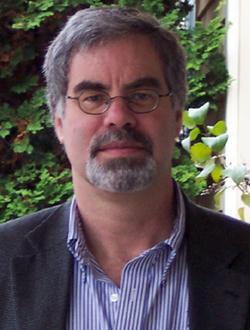
William C Heindel
William C Heindel
Professor of Cognitive and Psychological Sciences
Overview
William Heindel is a cognitive neuroscientist with research interests in human memory, attention and perception in both neurologically intact individuals and brain-damaged patients with neurocognitive disorders. Dr. Heindel received a B.S. in engineering from the University of Wisconsin-Madison in 1980, and a Ph.D. in neurosciences from the University of California, San Diego in 1989. He came to Brown in 1992 following postdoctoral training in neuroimaging and neuropsychology at UCSD. In addition to his research activities, he is also currently serving as Chair of the Department of Cognitive, Linguistic, and Psychological Sciences.
Brown Affiliations
Research Areas
Aging | Alzheimer's disease | Cognition | cognitive neuroscience | dementia | EEG | ERP | memory | Neuropsychology | semantic memory | sensory integration
Publications
| Venkatesan UM, Festa EK, Ott BR, Heindel WC. "Differential Contributions of Selective Attention and Sensory Integration to Driving Performance in Healthy Aging and Alzheimer's Disease." Journal of the International Neuropsychological Society, vol. 24, no. 5, 2017, pp. 486-497. |
| Festa, Elena K., Katz, Andrew P., Ott, Brian R., Tremont, Geoffrey, Heindel, William C. "Dissociable Effects of Aging and Mild Cognitive Impairment on Bottom-Up Audiovisual Integration." Journal of Alzheimer's Disease, vol. 59, no. 1, 2017, pp. 155-167. |
| Landy KM, Salmon DP, Galasko D, Filoteo JV, Festa EK, Heindel WC, Hansen LA, Hamilton JM. "Motion discrimination in dementia with Lewy bodies and Alzheimer disease." Neurology, vol. 85, no. 16, 2015, pp. 1376-1382. |
| Salmon, David P., Heindel, William C., Hamilton, Joanne M., Vincent Filoteo, J., Cidambi, Varun, Hansen, Lawrence A., Masliah, Eliezer, Galasko, Douglas. "Recognition memory span in autopsy-confirmed Dementia with Lewy Bodies and Alzheimer's Disease." Neuropsychologia, vol. 75, 2015, pp. 548-555. |
| Kane, Amy E., Festa, Elena K., Salmon, David P., Heindel, William C. "Repetition priming and cortical arousal in healthy aging and Alzheimer's disease." Neuropsychologia, vol. 70, 2015, pp. 145-155. |
| Landy, Kelly M., Salmon, David P., Filoteo, J. Vincent, Heindel, William C., Galasko, Douglas, Hamilton, Joanne M. "Visual search in Dementia with Lewy Bodies and Alzheimer's disease." Cortex, vol. 73, 2015, pp. 228-239. |
| Ott, Brian R., Davis, Jennifer D., Papandonatos, George D., Hewitt, Scott, Festa, Elena K., Heindel, William C., Snellgrove, Carol A., Carr, David B. "Assessment of Driving-Related Skills Prediction of Unsafe Driving in Older Adults in the Office Setting." Journal of the American Geriatrics Society, vol. 61, no. 7, 2013, pp. 1164-1169. |
| Festa, E. K., Ott, B. R., Manning, K. J., Davis, J. D., Heindel, W. C. "Effect of Cognitive Status on Self-Regulatory Driving Behavior in Older Adults." Journal of Geriatric Psychiatry and Neurology, vol. 26, no. 1, 2013, pp. 10-8. |
| Festa, Elena, Katz, Andrew, Ott, Brian, Heindel, William. "Perceptual binding of audiovisual speech information is disrupted at the preclinical stage of Alzheimer's disease." Alzheimer's & Dementia, vol. 9, no. 4, 2013, pp. P452. |
| Heindel, William C., Festa, Elena K., Ott, Brian R., Landy, Kelly M., Salmon, David P. "Prototype learning and dissociable categorization systems in Alzheimer's disease." Neuropsychologia, vol. 51, no. 9, 2013, pp. 1699-1708. |
| Heindel, William, Festa, Elena, Ott, Brian, Sofer, Imri, Serre, Thomas. "Rapid visual categorization as a sensitive measure of early Alzheimer's disease." Alzheimer's & Dementia, vol. 9, no. 4, 2013, pp. P451-P452. |
| Davis, Jennifer D., Papandonatos, George D., Miller, Lindsay A., Hewitt, Scott D., Festa, Elena K., Heindel, William C., Ott, Brian R. "Road test and naturalistic driving performance in healthy and cognitively impaired older adults: does environment matter?." Journal of the American Geriatrics Society, vol. 60, no. 11, 2012, pp. 2056-62. |
| Heindel, William. "Cortical connectivity and sensory binding: A neurocognitive approach to the detection and assessment of Alzheimer's disease." Alzheimer's & Dementia, vol. 7, no. 4, 2011, pp. S673. |
| Festa, Elena, Ott, Brian, Tremont, Geoffrey, Heindel, William. "Neocortical disconnectivity disrupts semantic binding in Alzheimer's disease." Alzheimer's & Dementia, vol. 7, no. 4, 2011, pp. S244. |
| Heindel, William C., Festa, Elena K., Davis, Jennifer D., Miller, Lindsay A., Knott, Stephanie, Ott, Brian R. "Differential contributions of selective attention and sensory integration to the decline in driving skills in aging and early Alzheimer's disease." Alzheimer's & Dementia, vol. 6, no. 4, 2010, pp. S128-S129. |
| Festa, Elena K., Heindel, William C., Ott, Brian R. "Dual-task conditions modulate the efficiency of selective attention mechanisms in Alzheimer's disease." Neuropsychologia, vol. 48, no. 11, 2010, pp. 3252-61. |
| Festa, Elena K., Heindel, William C., Ott, Brian R. "Dual-task conditions modulate the efficiency of selective attention mechanisms in Alzheimer's disease." Alzheimer's & Dementia, vol. 6, no. 4, 2010, pp. S488. |
| Daiello LA, Ott BR, Festa EK, Friedman M, Miller LA, Heindel WC. "Effects of cholinesterase inhibitors on visual attention in drivers with Alzheimer disease." Journal of Clinical Psychopharmacology, vol. 30, no. 3, 2010, pp. 245-251. |
| Ott, B. R., Heindel, W. C., Papandonatos, G. D., Festa, E. K., Davis, J. D., Daiello, L. A., Morris, J. C. "A longitudinal study of drivers with Alzheimer disease." Neurology, vol. 70, no. 14, 2008, pp. 1171-1178. |
| Ott BR, Festa EK, Amick MM, Grace J, Davis JD, Heindel WC. "Computerized maze navigation and on-road performance by drivers with dementia." Journal of Geriatric Psychiatry and Neurology, vol. 21, no. 1, 2008, pp. 18-25. |
| Salmon, David P., Hamilton, Joanne M., Filoteo, J. Vincent, Heindel, William C., Galasko, Douglas. "P2-216: Working memory deficits are greater in patients with autopsy-confirmed dementia with Lewy bodies (DLB) than in those with Alzheimer's disease (AD)." Alzheimer's & Dementia, vol. 4, no. 4, 2008, pp. T434-T435. |
| Daiello, Lori A., Festa, Elena K., Ott, Brian R., Heindel, William C. "P2-426: Cholinesterase inhibitors improve visual attention in drivers with Alzheimer's disease." Alzheimer's & Dementia, vol. 4, no. 4, 2008, pp. T498. |
| Festa, Elena K., Papandonatos, George D., Ott, Brian R., Heindel, William C. "P3-447: Cognitive factors associated with longitudinal decline in driving skill in patients with Alzheimer's disease." Alzheimer's & Dementia, vol. 4, no. 4, 2008, pp. T652. |
| Paxton, Jessica L., Peavy, Guerry M., Jenkins, Cecily, Rice, Valerie A., Heindel, William C., Salmon, David P. "Deterioration of Visual-Perceptual Organization Ability in Alzheimer's Disease." Cortex, vol. 43, no. 7, 2007, pp. 967-975. |
| Gitten JC, Winer JL, Festa EK, Heindel WC. "Conditional associative learning of spatial and object information in children with attention deficit/hyperactivity disorder." Child Neuropsychology, vol. 12, no. 1, 2006, pp. 39-56. |
| Festa EK, Ott BR, Heindel WC. "Considering phasic alerting in Alzheimer's disease: comment on Tales et al. (2006)." Neuropsychology, vol. 20, no. 6, 2006, pp. 757-60; discussion 761-2. |
| Ott, Brian R., Festa, Elena, Amick, Melissa, Grace, Janet, Davis, Jennifer, Heindel, William C. "P4-177." Alzheimer's & Dementia, vol. 2, no. 3, 2006, pp. S568. |
| Strangman, G. "Learning Motor Sequences with and without Knowledge of Governing Rules." Neurorehabilitation and Neural Repair, vol. 19, no. 2, 2005, pp. 93-114. |
| Festa, Elena K., Insler, Rachel Z., Salmon, David P., Paxton, Jessica, Hamilton, Joanne M., Heindel, William C. "Neocortical Disconnectivity Disrupts Sensory Integration in Alzheimer's Disease." Neuropsychology, vol. 19, no. 6, 2005, pp. 728-38. |
| GRACE, JANET, AMICK, MELISSA M., D'ABREU, ANELYSSA, FESTA, ELENA K., HEINDEL, WILLIAM C., OTT, BRIAN R. "Neuropsychological deficits associated with driving performance in Parkinson's and Alzheimer's disease." Journal of the International Neuropsychological Society, vol. 11, no. 6, 2005, pp. 766-75. |
| Taylor, J. R., Heindel, W. C. "Electrophysiological evidence for a fundamental role of perceptual features in concept representation: N400 priming by shared color and shape information." Journal of Vision, vol. 4, no. 8, 2004, pp. 516-516. |
| Festa-Martino, Elena, Ott, Brian R., Heindel, William C. "Interactions Between Phasic Alerting and Spatial Orienting: Effects of Normal Aging and Alzheimer's Disease." Neuropsychology, vol. 18, no. 2, 2004, pp. 258-268. |
| Festa-Martino, E., Ebesutani, C., Heindel, W. C. "Phasic alerting and spatial orienting interact under peripheral but not central cuing conditions: Evidence for a selective enhancement of sensory processing." Journal of Vision, vol. 4, no. 8, 2004, pp. 711-711. |
| Festa-Martino, E., Gindes, A., Heindel, W. "Driving and covert orienting: Differential effects of dual-task conditions on selective attention and arousal." Journal of Vision, vol. 2, no. 7, 2002, pp. 11-11. |
| Stout, J. C., Salmon, D. P., Butters, N., Taylor, M., Peavy, G., Heindel, W. C., Delis, D. C., Ryan, L., Atkinson, J. H., Chandler, J. L., Grant, I. "Decline in working memory associated with HIV infection." Psychological Medicine, vol. 25, no. 06, 1995, pp. 1221. |
| Becker, James T., Caldararo, Rocco, Baddeley, Alan D., Dew, Mary Amanda, Heindel, William C., Banks, Gordon, Dorst, Stanley K., Lopez, Oscar L. "Methodological considerations in estimating speed of cognitive operations." Journal of the International Neuropsychological Society, vol. 1, no. 01, 1995, pp. 3. |
| Ostergaard, Arne L., Heindel, William C., Paulsen, Jane S. "The biasing effect of verbal labels on memory for ambiguous figures in patients with progressive dementia." Journal of the International Neuropsychological Society, vol. 1, no. 03, 1995, pp. 271. |
Research
Research Overview
My research is concerned with understanding the neural and cognitive substrates underlying human memory and attention using a variety of methodological approaches within cognitive neuroscience, including the cognitive neuropsychological investigation of brain-damaged populations and the use of noninvasive electrophysiological (quantitative EEG/ERP) and functional brain imaging techniques within both normal and brain-damaged populations.
Research Statement
My research is currently focused on investigating the differential effects of aging and neurological disease on semantic memory, attention, and sensory integration using a variety of methodological approaches including cognitive neuropsychology, electrophysiology (EEG), and functional brain imaging (fMRI). In addition to studying patient populations as model systems for understanding the neural substrates mediating normal cognitive function, my research is also concerned with the development of novel neurocognitive markers and therapeutic approaches for detecting and treating Alzheimer's disease and other neurological disorders.
Some of my current research projects are:
● Investigations of the Perceptual Basis of Semantic Memory
A view of semantic memory as grounded in perception has emerged, based mainly on recent neuroimaging (i.e., fMRI) evidence that retrieval from semantic memory activates unimodal perceptual cortex. Current studies in my lab are investigating this issue through complementary high-temporal resolution behavioral and electrophysiological measures of online semantic processing. Results from these studies are generally supportive of a distributed perceptual-feature model of semantic memory.
● Neuropsychological Substrates underlying Category Learning
There are several lines of evidence to suggest that categorical information about objects can be acquired either through an explicit system that mediates the use of conscious strategies to categorize stimuli or through an implicit system that mediates unconscious categorization. However, the defining features of these different systems as well as the conditions under which they may interact and contribute to category learning remain unresolved. Research in my lab addresses this issue by: 1) exploring the conditions under which explicit and implicit category learning systems are recruited in normal populations; and 2) examining patterns of category learning performance in patient populations with specific neurological damage to on or the other system mediating category learning.
● Arousal, Attention and Semantic Processing in Alzheimer's Disease
Alzheimer patients' semantic processing impairments in general, and their semantic priming impairments in particular, may be attributable to several distinct factors, including: a) the presence of an actual disruption of semantic memory due to damage to neocortical association areas; b) the presence of selective attentional deficits due to damage within superior parietal regions; and c) the presence of modulatory deficits due to damage within the noradrenergic and cholinergic ascending projection systems. We are currently looking at these different possibilities using a variety of behavioral and electrophysiological techniques that systematically examine how changes in attentional systems influence semantic memory processes in Alzheimer patients.
● Feature Integration and Attention in Alzheimer's Disease
We are looking at the relationship between object representation and visual attention in Alzheimer patients. Although some recent studies suggest that Alzheimer patients possess specific object-based attentional deficits, the disruption of corticocortical connections within higher-order association areas in these patients may also produce impairments in integrating visual information into coherent object representations. Thus, the apparent deficits on tests of visual attention exhibited by Alzheimer patients may be influenced as much by impairments in object representation as by impairments in attention. Identification of the ways in which object representation and attentional processes interact in Alzheimer's disease should not only provide a better understanding of the cognitive deficits associated with this disease, but should also lead to important information about the neuropsychological substrates mediating normal object perception and attention.
● Interactions between Hippocampal and Striatal Memory Systems in ADHD
Although the neuroanatomical underpinnings of ADHD are beginning to be identified, this emerging anatomical model has yet to be integrated with a model of cognitive dysfunction in ADHD. What is critically needed at this time is the development of a coherent conceptual framework for understanding how dysfunction in specific brain networks translates into disordered information processing and thereby into the impulsive and hyperactive behaviors characteristic of ADHD. A potentially fruitful, and as yet unexplored, approach is to view the neuropsychological manifestations of ADHD in terms of interactions between hipppocampal and striatal memory systems. While previous studies in both humans and animals have been successful in identifying and isolating distinct brain systems underlying different forms of memory, relatively few studies have addressed how these distinct learning mechanisms interact to produce coordinated behavioral adaptation to the environment. For example, information acquired through one memory system may either complement or interfere with information acquired through the other memory system, depending on the particular demands of the learning task. Children with ADHD may provide an ideal population to investigate the nature of interactions between distinct memory systems, since unlike other neurological disorders with specific dysfunction within either the hippocampal (e.g., amnesics) or striatal (e.g., Huntington's or Parkinson's disease) memory system, ADHD may best be characterized as a disruption in the normal balance in the activation and utilization of these two learning mechanisms.
Funded Research
NRSA Predoctoral Fellowship, University of California, San Diego (1987-1988).
Co-Investigator: "Memory and Attentional Processes in HIV-Infected Patients." $109,456, 1990-1992. UC Task Force on AIDS R90SD041.
Co-Investigator, "Dual-Task Motor Performance in Alzheimer's Disease Patients With and Without Extrapyramidal Motor Signs" (NIA ADRC Pilot Grant)$20,000; 7/01/91 - 6/30/92.
Co-Investigator: "Brain Imaging Correlates of Cognitive Decline in Aging and Dementia." $231,300, 1992-1995. Department of Veterans Affairs Merit Review.
Co-Investigator: "Cognitive Deficits Related to Chronic Alcoholism." $396,141 1992-1996. NIAAA 5 R01 AA00187.
Co-Investigator: "Determinants of Impaired Priming in Alzheimer's Disease." $317,576, 1992-1996. NIMH 1 R01 MH48819-01.
Principal Investigator: "Arousal, Attention and Priming in lzheimer's Disease." $298,916; NIH 1 R01 AG15375-01; 4/01/99 - 03/31/04.
Principal Investigator, "Feature Integration and Attention in Alzheimer's Disease." $8,000; Salomon Faculty Research Award, Brown University; 3/01/99.
Co-Investigator, "Proposal for ERP Imaging Facility" ; Salomon aculty Research Award, and Burroughs Wellcome Interfaces Innovation Grant, Brown University, 3/01/00.
Co-Investigator, "A Longitudinal Study of Hazardous Drivers with Dementia" (NIA R01)$1,200,000; NIH 1 R01 AG16335; 9/15/01 4/30/07.
Principal Investigator (with Jerome Sanes), "Functional Imaging at Brown University." $1,000,000; Falk Medical Research Trust; 12/01/02 12/31/05.
Principal Investigator, "Multisensory Integration in Alzheimer's Disease"; $19,200; Collaboration for Translational Brain Research, Brown University, 10/01/03 10/31/04.
Principal Investigator, "Behavioral and Electrophysiologial Investigation of Semantic Memory in Alzheimer's Disease"; $182,160; Alzheimer's Association, 10/01/03 9/30/07.
Principal Investigator (with Pedrag Neskovic), "Using Physiological Measurements and Artificial Neural Networks to Monitor and Predict Cognitive States." $81,620; Vice President for Research Seed Fund, Brown University; 4/01/05 3/31/07.
Co-Investigator, "Naturalistic Assessment of the Driving Ability of Cognitively Impaired Elders"; $1,783,538; NIH 2 R01 AG016335-06A1; 05/15/07 - 04/30/11.
Background
Education and Training
| Year | Degree | Institution |
|---|---|---|
| 1989 | PhD | University of California, San Diego |
| 1980 | BS | University of Wisconsin at Madison |
Affiliations
Collaborators
| Name | Title |
|---|---|
| Hirshberg, Laurence | Clinical Assistant Professor of Psychiatry and Human Behavior |
Affiliations
Cognitive Neuroscience Society
Society for Neuroscience
Memory Disorders Research Society
Association for Psychological Science
American Statistical Association
Ad Hoc Reviewer for: Behavioral Neuroscience; Biological Psychiatry; Brain; Cortex; Journal of Clinical and Experimental Neuropsychology; Journal of Experimental Psychology: General; Journal of the International Neuropsychological Society; Memory and Cognition; Neuropsychologia; Neuropsychology; Psychological Science; Psychopharmacology
Teaching
Teaching Overview
I teach in the areas of cognitive neuropsychology, human memory, cognitive neuroscience, and research methods and statistics.
Teaching
| CLPS 0010 - Mind, Brain and Behavior: An Interdisciplinary Approach |
| CLPS 0450 - Brain Damage and the Mind |
| CLPS 1480H - Disorders of Memory |
| CLPS 2906 - Experimental Design |
| CPSY 0450 - Brain Damage and the Mind |